Displaced by conflicts, hit by food shortage

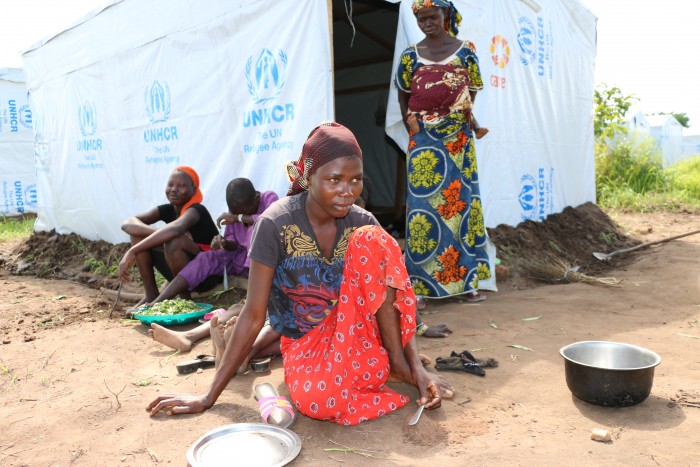
Chad currently hosts nearly 400,000 refugees. Recently, over 6,000 people have sought refuge in the country from neighbouring Central African Republic. The refugees often live in dire conditions. Belmi is one of them. Photo: Daouda GUIROU/LWF


Diba, southern Chad – Sitting on bare ground, Belmi Mercy seems worried. In her left hand, she holds a teaspoon. She scratches the surface of the ground with it occasionally. A cooking pot vaguely lies close to her. Normally, at this time of the day, the pot should already be set on fire for cooking. The 22 years old woman is visibly anxious or even traumatised.

Nearly a month ago, she had to flee her native village N‘gaounday, in Central African Republic, due to recurring violence between armed groups.

‘‘I used to flee many times in bush, and come back again a few days later‘‘ she said, ‘‘but this time, they [the armed groups] killed 9 people in my neighborhood. It was panic everywhere. I came very close to death, and I decided to leave.”

Belmi left her village with her two sons to cross the border. ACT Alliance member The Lutheran World Federation (LWF) team accommodated her in the village of Mini in Chad, under the supervision of UNHCR, and CNARR(the national commission in charge of refugees). Belmi received a hot meal. For the first time, since a couple of days, she had enough to eat with her children.

Few days later, Belmi and her kids were transferred to a safer place at Diba. A small village located over 40 km from the border. There, with the support of UNHCR, Belmi found a shelter – a plastic tent. She also received sleeping mats, cooking pots and few other items for her basic needs.

FOOD RATION REDUCED BY HALF

Several thousand refugees, like Belmi, are facing food shortage in Chad. Due to the lack of funding, the monthly food ration provided to refugees, has been reduced by half.

‘‘Its currently lean period [when food stock dries out before the next harvest]. The reduction of food ration could increase level of malnutrition, especially among children and pregnant women.’‘ says Adamou Koumanda, LWF Representative in Chad, ‘‘we urgently need more funding to bring life-saving assistance to refugees‘‘.

In total, LWF is currently providing assistance to over 200,000 refugees and host communities in Chad, thanks to the support of UNHCR, WFP, BPRM (USA) and ACT member Diakonie Katastrophenhilfe (DKH/BMZ).

__________

Text and photos by Daouda Guirou (LWF)

[COP25 Blog]: No hay justicia Climática sin Justicia Social

There is no silent story. As much as they burn it, no matter how much they break it, no matter how much they lie to it, human history refuses to shut up. Eduardo Galeano

Parece que la COP25 Chile en Madrid, la única reminiscencia que tiene del país andino, son los nombres de los salones de conferencias o de pabellones, que evocan ríos, regiones y ciudades chilenas. 

Llegamos a Madrid, ya con pesadumbre por la cancelación y cambio de lugar, con todo lo que esto significa políticamente; tanto para los gobiernos, tanto para la sociedad civil y los movimientos sociales.  Ya antes se había cambiado de lugar, Brasil era el país donde la COP25 iba a tener lugar, pero la aplanadora de bolsonaro, que no sólo derriba los bosques en la amazonía sino integración y acuerdos internacionales pasó por arriba de cualquier intento organizativo, abriendo lugar a la proposición de Chile.

En Madrid, la COP de presidencia chilena todo parece ir bien, según el Presidente Piñera. Chile está en un proceso de descarbonización; un país moderno que se adapta al cambio Climático y respeta los Derechos Humanos. Pareciera, que es válido decir cualquier cosa que se desee frente al micrófono de la plenaria mientras sea eco amigable y use los términos adecuados.  Mientras tanto en Chile, no sólo no existe un proceso real de descarbonización sino que las personas continúan en las calles resistiendo la opresión de las fuerzas armadas. Los informes son escalofriantes sobre la violación de los Derechos humanos; muertos, torturados y un pueblo que dice basta a 30 años a las inequidades sociales. 

¿Pero qué tiene que ver la justicia climática con el conflicto político y social que sucede en chile? Básicamente mucho. Sería difícil entender la justicia climática separada de la justicia social y económica. El cambio climático no es más que la consecuencias de un sistema desigual que ha depredado la naturaleza y los bienes compartidos con el fin del crecimiento económico ilimitado, en donde finalmente unos pocos se benefician de aquello que es de todos y todas. Sin embargo, los impactos siempre afectan de mayor manera a los más vulnerados de nuestras sociedades. También las acciones para mitigación de los efectos de cambio climático, si no son pensadas en relación con las desigualdades sociales y las transiciones justas económicas y sociales no significarán cambios reales para las poblaciones más afectadas.

En esos días, cuando los líderes mundiales están discutiendo acuerdos para el clima por tercera vez consecutiva en Europa (la cuarta será el año que viene, el Glasgow, Escocia), estamos conscientes de los desafíos para una participación global equilibrada. Al mismo tiempo, denunciamos el hecho de que América Latina vive un contexto de profundización de las desigualdades y de la pobreza, en el que crece la vulnerabilidad de la población a los efectos de los cambios climáticos. En Amazonia, la deforestación ha aumentado 30% entre agosto de 2018 y julio de 2019, y con eso también crece la violencia y criminalización a líderes indígenas, quilombolas y otros protectores del bosque. La falta de medidas de protección a los pueblos de Amazonia son parte de una política anunciada de explotación comercial del mayor bosque tropical del mundo. La mineración, el agronegocio y las industrias forestales avanzan en ese territorio en disputa. 

En un acto de solidaridad con lo que está pasando en Amazonia estaremos en el espacio de la sociedad civil, la Cumbre Social por el Clima, que sumará diálogos más allá de los espacios formales de la COP. El sábado 7 de diciembre haremos una celebración interreligiosa por la Amazonía, para orar y exigir justicia por los pueblos de la región, en conjunto con comunidades de fe de Madrid. 

Estamos juntos y juntas como miembros de la Alianza ACT y distintas redes de organizaciones basadas en la Fe de América Latina trabajando en acciones para exigir que se cumplan los compromisos del Acuerdo de París; que se instalen mecanismos reales de financiamiento para abordar las pérdidas y daños;  modelos territoriales de mitigación, la promoción de las contribuciones determinadas a nivel nacional con planes de adaptación con enfoque en la justicia social, en los derechos humanos, en el género, incluyendo las formas de conocimiento tradicional de los pueblos indígenas. 


Ese texto fue escrito por Sheila Tanaka de Christian Aid Brasil y Marcelo Leites de FUMEC LAC

ACT hace un llamado por la paz sostenible en Colombia

La alianza ACT renueva su llamado por la paz en Colombia, país que por décadas ha sufrido violencia y conflictos.

Rudelmar Bueno de Faria, Secretario General de la Alianza ACT, instó al gobierno de Colombia en conjunto con el Ejercito de Liberación Nacional (ELN) a retornar a la mesa de negociación para trazar el camino hacia una paz duradera.

“Como Alianza, hemos seguido muy de cerca el proceso de paz en Colombia y hemos, a través de nuestros miembros y socios, apoyado a las comunidades afectadas por la violencia y el conflicto en el país. Continuaremos con nuestros esfuerzos de acompañamiento al pueblo de Colombia”, dijo de Faria.

Previamente, Dialogos Intereclesiales por la Paz (DiPaz), realizó una declaración (disponible en Español y en Inglés) en la que hacia un llamado al gobierno del Presidente Juan Manuel Santos y al ELN a retomar las negociaciones, las cuales fueron suspendidas por el escalamiento de la violencia.

“La alianza ACT apoya el mensaje dado por DiPaz y se une al llamado de otras organizaciones ecuménicas que han trabajado e incidido por la paz y la justicia en Colombia por muchos años. Además, pedimos a la comunidad internacional a que mantengan el proceso de paz de Colombia dentro de sus agendas”, dijo de Faria.

Refugees: An opportunity to grow together

ACT Alliance, together with a range of other ecumenical actors, today issued a joint ecumenical statement for World Refugee Day 2017. Calling the unprecedented global refugee crisis “an opportunity to grow together,” the statement calls on all of us “to build bridges of solidarity rather than walls of division.” Reflecting on the statement’s assertion that, “[w]ealthy countries cannot evade their responsibility for the wounds inflicted on our planet – environmental disasters, the arms trade, developmental inequality – that drive forced migration and human trafficking,” ACT Alliance General Secretary Rudelmar Bueno de Faria said, “the current levels of human displacement are unacceptable. States are bound by their commitments under international law – including the Refugee Convention – and by their commitments outlined in last year’s New York Declaration on large movements of refugees and migrants, to fulfill these obligations, as the world community works towards agreeing on new global compacts on refugees and on migration in 2018.”

Joint ecumenical statement for World Refugee Day 2017

The Christian Bible tells the story of two men, Peter and Cornelius, utterly divided by religious belief and culture, who in encountering each other discovered a truth about God’s common will for them that neither had previously grasped. They learnt that the Holy Spirit brings down walls and unites those who might think that they have nothing in common.

All around the world, women, men, and children are forced by violence, persecution, natural and human-caused disasters, famine, and other factors, to leave their homelands. Their desire to escape suffering is stronger than the barriers erected to block their way. The opposition by some countries to the migration of forcibly displaced people will not keep those who undergo unbearable suffering from leaving their homes.

Wealthy countries cannot evade their responsibility for the wounds inflicted on our planet – environmental disasters, the arms trade, developmental inequality – that drive forced migration and human trafficking. While it is true that the arrival of migrants in more developed countries can present real and significant challenges, it can also be an opportunity for openness and change. Pope Francis poses this question to us: “How can we experience these changes not as obstacles to genuine development, but rather as opportunities for genuine human, social and spiritual growth?” Societies that find the courage and the vision to go beyond the fear of foreigners and migrants soon discover the riches that migrants bring with them, and always have.

If we, as a human family, insist on only ever seeing refugees as a burden, we deprive ourselves of the opportunities for solidarity that are also always opportunities for mutual learning, mutual enrichment, and mutual growth.

It is not enough for Christians to profess to love Christ: belief is authentic only if it is expressed in loving action. We are one Body of Christ, undivided. In the words of Dietrich Bonhoeffer, “It is only through Jesus Christ that we are brothers and sisters of one another…. Through Christ our mutual belonging is real, integral, and for all time.” If we are one body, we are knitted into a solidarity that defines us and makes demands of us.

Signs of solidarity can be multiplied beyond the borders of religion and culture. Meeting believers of other persuasions encourages us to deepen our knowledge of our own faith, and in our encounter with our refugee brothers and sisters, God speaks to us and blesses us as He did Cornelius and Peter.

In every genuine encounter, an exchange of gifts takes place. Sharing with others what we have and own, we discover that all is given freely by God. At the same time, in welcoming those whom we encounter, we meet the God who is always already present with the vulnerable, at the peripheries, and in the other.

Increasingly around the world we witness the building of walls to keep out the displaced: not just physical walls, but also walls of fear, prejudice, hatred, and ideology. Let us all, as one human family, strive to build bridges of solidarity rather than walls of division. Our refugee sisters and brothers present us with opportunities for mutual enrichment and flourishing: it is God who brings us together.

With the development of new international frameworks – Global Compacts on Migrants and on Refugees – in 2018, States should not only ensure a more effective responsibility-sharing in response to large movements, but they should also accept the opportunity to recognize and highlight the significant contributions that refugees and migrants make in their host communities.

ACT Alliance

Alboan

Anglican Alliance

Caritas Internationalis

Catholic Charities USA

Community of Sant’Egidio

Dominicans for Justice and Peace

Entreculturas

International Union of Superior Generals (UISG)

Franciscans International

Jesuit Refugee Service

Lutheran World Federation

Pax Christi International

Scalabrinian Missionaries

Scalabrini International Migration Network (SIMN)

Talitha Kum – Worldwide Network of Religious Life against Trafficking in Persons

Union of Superior Generals (USG)

Vivat International

Voices of Faith

World Union of Catholic Women’s Organizations (WUCWO)


Presenting the ACT Alliance Disaster Risk Reduction- Climate Change Adaptation Award 2017

PRESS RELEASE

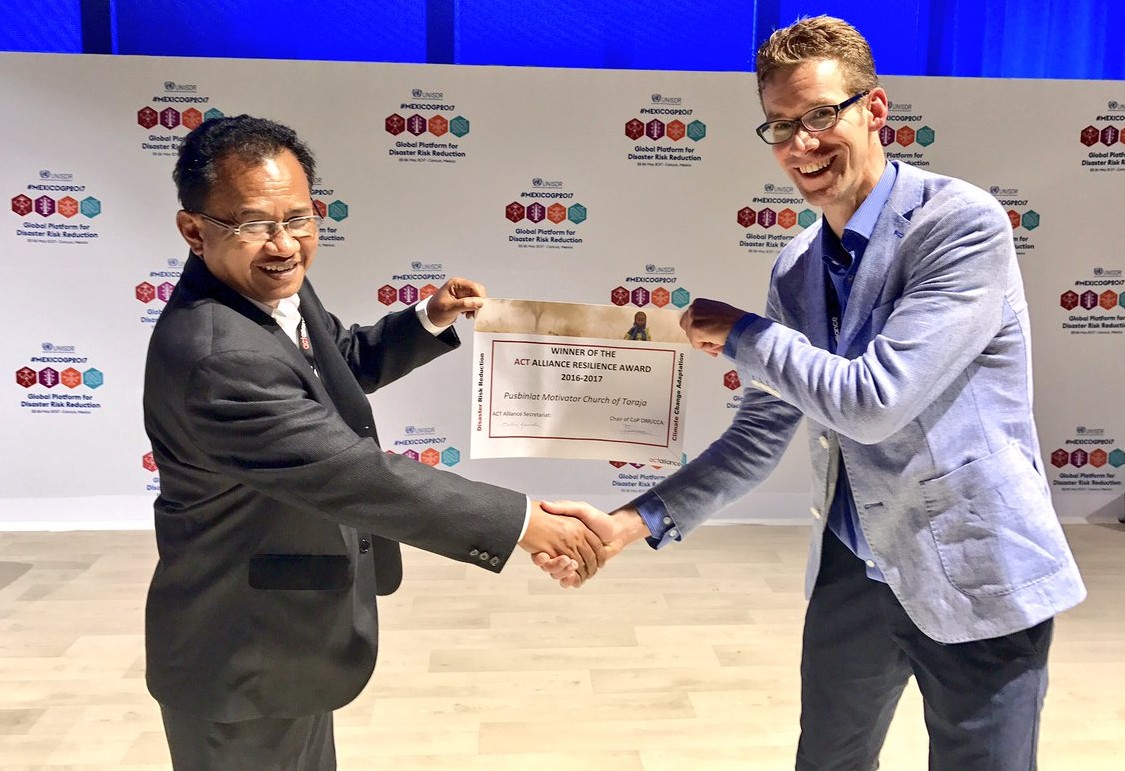
Representatives of the ACT Alliance and Pusbinlat Motivator shaking hands
Tandu Ramba (left) from Pusbinlat Motivator Toraja Church receiving the Disaster Risk Reduction- Climate Change Adaptation Award presented by Jeroen Jurriens (right) from the ACT Alliance. Photo: Tamas Marki (Church of Sweden)


TORONTO, Canada, 9 June 2017. The ACT Alliance Disaster Risk Reduction- Climate Change Adaptation Award (ACT DRR-CCA) for 2017 was awarded to the Lighthouse Project in Indonesia implemented by Pusbinlat Motivator Toraja Church in partnership with ACT Alliance members ; Bread for the World and Diakonie Katastrophenhilfe Presented during the 2017 Global Platform on Disaster Risk Reduction in Cancun, the award highlights the work of the ACT Alliance and Faith Based Organizations responding to climate change.

“I was very happy to receive the award. The award gives motivation to those of us who work in remote areas, who are in many cases experiencing discrimination in terms of development and are encouraged to do better,” says Tandu Ramba from the Pusbinlat Motivator who accepted the award.

The Lighthouse Project is implemented in three villages of Tana Toraja, South Sulawesi, Indonesia and is focused on sustainable community development, climate change, and disaster risk reduction. “All activities take environmental conservation into consideration. The most powerful lesson learned from this project is that poverty can be reduced without destroying the environment,” says Tandu.

The project establishes various initiatives. Disaster risk reduction teams and an early warning system have been set up by villagers to monitor and respond to disasters including landslides and forest fires. To date, the project has empowered 176 women in the three villages through training programs encouraging alternative livelihoods and the monitoring of planting seasons. As part of the project, a climate field school works with villagers to address problems related to a changing climate, and to develop seasonal planting calendars.

“The most vulnerable people often live in remote areas where a lack of resilience is caused by poverty. Often, remote communities contribute significantly to the mitigation of climate change but rarely get any appreciation from other parties who produce emissions,” Tandu said.

“Disasters strike people all over the world, without paying attention to borders, ethnic groups, religion, etc. Strengthening resilience is a responsibility for all of us,” says Jeroen Jurriens, the head of the ACT Alliance delegation to the Cancun conference.

“At ACT Alliance we link the local to the global level. We let people like Tandu talk to stakeholders in the international arena directly. It is our firm belief that those living in disaster prone areas are in the best position to explain their context and be involved in finding solutions,” Jeroen continues.

“Through the ACT Award, I hope that people can appreciate our efforts in protecting people from various hazards,” says Tandu.

The ACT DRR-CCA is awarded annually to an ACT Alliance member who has demonstrated innovation and best practices preparing communities to respond to disasters.

ENDS

________

For media inquiries, please contact:
Joanna Patouris, ACT Alliance, Climate Change Communications Coordinator
Email: joanna.patouris@actalliance.org

ACT Board issues solidarity statement on the political and social crisis in Brazil

The Board of the global ACT Alliance, meeting in Geneva on the 1st and 2nd of June 2017 expresses its deep concern with the unfolding crisis of democracy in Brazil, characterised by violence and aggression against the most vulnerable citizens of the country.

Since the current political crisis began, violence is escalating, especially in remote areas and against Indigenous Peoples. This year alone 35 peasants, indigenous and human/environmental defenders have been murdered in Brazil; painful evidence of the rising hostility towards vulnerable groups and those that stand up for them.

Although political woes and violence are not uncommon in the country, the impunity of the attackers and the links with police activities should concern all Brazilians and the international community as expressed by the UN in its recent statement.

The situation in Brazil requires our careful attention, permanent solidarity and commitment. As violence escalates, space for civil society shrinks, and the poorest and marginalized are the most affected by it.

The unprecedented austerity measures which lead to increasing inequality and a sharpening of social divisions are contributing to an escalating crisis that calls for action from the ecumenical movement. As affirmed by a declaration by FE-ACT, the ACT Forum in Brazil, it is critical that social provisions by the state are restored and that democratic institutions are revived and strengthened to guarantee social inclusion while reversing the trend towards greater inequality.  The distribution of income, fair taxation of wealth, fair and transparent political processes, fair and just application of the law should all be pursued.

We reaffirm our commitment to walk with the people who are directly affected by the unjust decisions currently being made. We, as representatives of the global ecumenical community, therefore call for a restauration of democratic principles and processes, especially taking into account the voices of the most marginalized.

All sectors of society, are called upon to take responsibility and help turn the tide of intimidation and violence.  It is time for active reflection, leveraging prophetic voices and joining hands in solidarity.

“But let justice roll down like waters, and righteousness like an ever-flowing stream! “
(Amos 5:24)

Congratulating the winner of the ACT DRR-CCA Good Practice Award

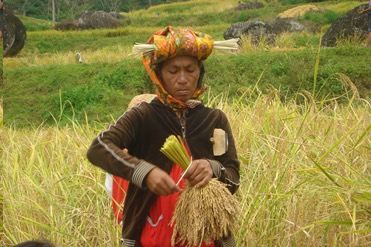
Farmers in Indonesia have learned to reap more rice with less seed through the System of Rice Intensification (SRI) training they received as part of their disaster risk reduction work. Photo: Pusbinlat Motivator-GT

Recognizing the unprecedented challenges to human well-being and safety posed by climate change related disasters, ACT Alliance is working actively to minimize the impacts of disasters through prevention, mitigation, and preparedness programs in over 100 countries. We are rooted in communities, where we assist people in identifying their risk, resources, and capacity to cope with the disasters.

The ACT DRR-CCA (Disaster Risk Reduction- Climate Change Adaptation) Award is awarded each year by ACT’s DRR-CCA Community of Practice (CoP) to an ACT member who has shown innovation and best practices in a programme over the last year.  The ACT Award winner is named during the Global Platform on Disaster Risk Reduction, taking place in Mexico now, which reviews the progress in the implementation of the Sendai Framework on DRR (SFDRR) which was adopted in March 2015 in Japan. The CoP is showcasing the unique role of Faith Based Organizations in DRR and is promoting locally-led DRR-work during the Global Platform. The winning organization has been invited to the Global Platform for DRR to present the project’s achievements to the public.

The winner for the 2017 ACT DRR-CCA award is the Lighthouse Project in Indonesia by Pusbinlat (Training Centre) Motivator GT, a partner of Bread for the World and Diakonie Katastrophenhilfe. The project  successfully  increased the community’s awareness of the potential negative impacts of climate change on their livelihoods and steps which can be taken to adapt capacities, increase resilience and reduce poverty such as:

  • tree planting,
  • reducing the use of agricultural chemicals,
  • use of organic compost and pesticides,
  • promoting local seed varieties,
  • refraining from burning rice straw,
  • reducing the use of plastics,
  • improving income and nutrition through home gardening,
  • diversifying crops and increasing the variety of foods eaten,
  • along with protecting housing and lives, and
  • developing opportunities for climate-friendly alternative livelihoods.

Today the ACT Award winner will present the project in the central hall in front of the main entrance of the Global Platform conference, putting ACT Alliance and Faith Based Organisations right in the spotlight!

Follow the ACT Alliance delegation on twitter during the Global Platform for DRR 2017 in Cancun, Mexico and share the power of faith in reducing risks to disasters!

@actalliance
@michaelmoss44
@tamas_cos
Hashtag: #MexicoGP2017

Blog author James MunpaPhichet Munpa (James), ACT Alliance Secretariat, Asia/Pacific
Regional Program Officer Asia/Pacific

G7 must address famine

PRESS RELEASE

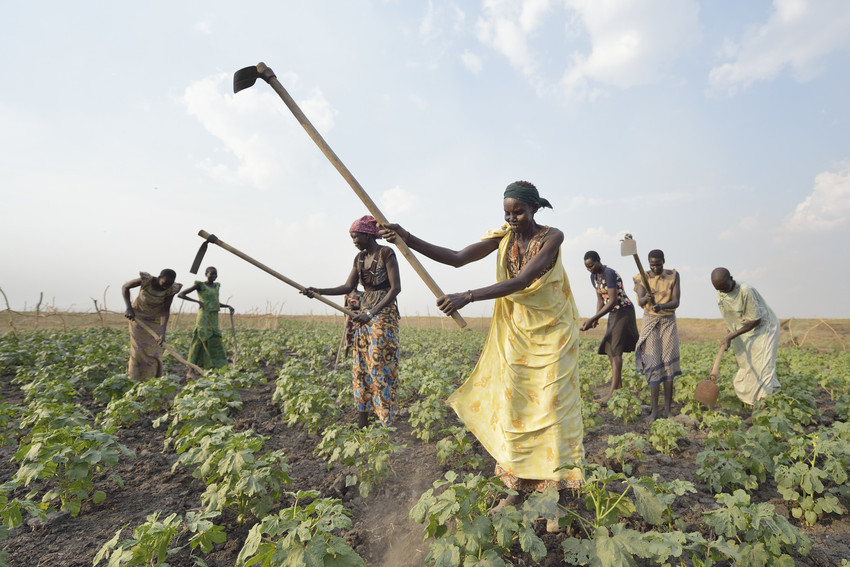
Adhieu Deng Ngewei and other women work together on April 12, 2017, in a community vegetable garden in Dong Boma, a Dinka village in South Sudan's Jonglei State. Most of the women's families recently returned home after being displaced by rebel soldiers in December, 2013, and they face serious challenges in rebuilding their village while simultaneously coping with a drought which has devastated their cattle herds. The Lutheran World Federation, a member of the ACT Alliance, is helping the villagers restart their lives with support for housing, livelihood, and food security. South Sudan. Photo: Paul Jeffrey/ACT
Adhieu Deng Ngewei and other women work together in a community vegetable garden in Dong Boma, a Dinka village in South Sudan’s Jonglei State. They face serious challenges in rebuilding their village while simultaneously coping with a drought which has devastated their cattle herds. ACT Member The Lutheran World Federation is helping the villagers restart their lives with support for housing, livelihood, and food security. South Sudan. Photo: Paul Jeffrey/ACT


In this day and age, famine cannot be tolerated, not just because every human being is valued in God’s sight and has the right to eat but also because starvation singles out the weakest and most vulnerable from among us.

It is the moral duty of wealthy nations to do all they can to provide life-saving funding and assistance and to work to end the underlying conditions that drive starvation: conflict, poor governance and climate change.

Last Sunday more than one billion Christians were called to take part in a Global Day of Prayer to End Famine. We as signatories helped lead that global event because we believe that this crisis demands our prayers and that governments, society and people of faith must act.

The current crisis is happening against a backdrop of worsening hunger. The number of people needing food assistance has risen by 35 per cent in the last year, from 80 to 108 million people. This appalling statistic flies in the face of global commitments to end poverty and hunger by 2030 and suggests that while things are improving for the vast majority of the world, things are worsening for the already worst off.

Humanitarian organizations – and our church members on the ground – are warning of catastrophe. In East Africa hundreds of thousands of people are now on the move, fleeing starvation and conflict or displaced across borders into hardscrabble settlements. Uganda now hosts the world’s largest refugee camp – Bidi Bidi, with more than 270,000 people. Every day thousands more South Sudanese arrive in Uganda, among them hundreds of unaccompanied children whose parents have been lost or killed. Food aid is desperately short.

In Somalia, hundreds of thousands have fled the dry lands where drought has destroyed whole herds of livestock and left villages with nothing to stay for. Aid workers report of mothers losing their children to hunger and thirst on the long trek to find food and water.

Cholera, diarrhea and other diseases are also killing children, their weakened bodies unable to cope with what otherwise is treatable. They and their families are dying silently in remote villages, on the march to find help, or trapped in conflict kill zones, where they are subject to bombings, kidnapping, rape and violence. Children are paying a particularly heavy price.

The last time that the world heard of famine was in 2011, when 260,000 Somalis died – half of them children. The situation is worse now. The UN says it has not seen a humanitarian crisis of this scale since 1945. Even though we know the trajectory of this crisis, the response is far too slow. Why is it that we only respond when death is staring us in the face?

This is why this crisis demands inspirational leadership from the G7 heads of state. Their leadership is needed to drive action in three areas.

First are commitments for the money required to fund life-saving aid. These include, along with food assistance, the therapeutic treatment and supplements children need to bring them back from the brink, deployment of water trucks to provide clean drinking water, and health and sanitation interventions to halt the spread of deadly diseases. So far only $1.6 billion of the $4.9 billion needed has been received. The rest is needed now. Any commitments must be converted into disbursements.

Second, commitment is needed to the hard work of addressing the drivers of conflict and injustice. This means consistently engaging in the world’s toughest and most dangerous places. Nations and international agencies need to resolve to foster peace before conflicts break out; hold governments accountable for perpetrating human rights abuses and escalating, rather than de-escalating conflicts; partner with governments to build institutions, civil society and the rule of law; and fund programmes that help the poor deal with climate change.

The G7 must reject the ideas of those who call for less intervention and for clawing aid money away from humanitarian and development work. More, rather than less, is needed if the cancerous effects of injustice, displacement and isolation are to be averted.

Finally, we pray that the G7 leaders will inspire all governments to stand with the world’s most vulnerable to bring about the same kind of improved prosperity that hundreds of millions of people have already experienced. The famine crisis we are now witnessing is the death rattle of extreme poverty. It requires the continued political will, engagement and funding of governments and their citizens to end it. Now is the time to save lives and get on with the job of eradicating this scourge.

ENDS

Signatories:

ACT Alliance
John Nduna
General Secretary
Contact person: Nick Clarke, head of strategy and partnerships
Tel: +41 22 791 6235
Mobile: +41 79 505 4927
Skype: nick.c.nz

Caritas in Veritate International-CiVI
Henry Cappello
President and Executive Director
Offices for CiVI USA (Arise and China)
3443, N. Central Avenue, Suite 1002,
Phoenix, AZ 85012, USA
t. +1 202 997 8888
t. +1 602 795 9810
henry@caritasinveritate.com

Lutheran World Federation
Rev. Dr Martin Junge
General Secretary
Contact person: Arni Svanur Danielsson, head of communication
Email: asd@lutheranworld.org
Phone: +41 22 791 6367

The Salvation Army
General André Cox
Contact person: Lt Colonel Dean Pallant
Director of the International Social Justice Commission
International Social Justice Commission
Email: IHQ-Communications@salvationarmy.org
Phone: +44 [0] 7825 427088

World Council of Churches
Rev. Dr Olav Fykse Tveit
General Secretary
Contact person: Marianne Ejdersten, director of communication
Email: mej@wcc-coe.org
Phone: +41 79 507 63 63
Skype: marianne.ejdersten

World Evangelical AllianceBishop Efraim M. Tendero
Contact person: Christine MacMillan
Associate Secretary General – Public Engagement,
Chair: Global Human Trafficking & Refugee Task Forces
World Evangelical Alliance
M. +1.416.825.6282 E. christinem@worldea.org
W. worldea.org F. facebook.com/worldea
Church Street Station, P.O. Box 3402, New York, NY 10008-3402

World Vision International
Thabani Maphosa
Partnership Leader, Food Assistance
Email: thabani_maphosa@wvi.org
Cell: +1 (202) 341 7549
Skype: thabani_maphosa
300 I Street, N.E. | Washington, DC, 20002 USA

Chris Derksen Hiebert
World Vision International,
Director, Public Policy and External Relations
Email: chris_derksen-hiebert@wvi.org
Phone: 1.416.275.0818
Skype: chrisderksenhiebert
Based in Canada (GMT-4)
Chris, will be available at the G7 from Wednesday, May 24

Christopher Hoffman MPM,
World Vision International,
East Africa Regional Humanitarian and Emergency Affairs Director,
Mob: +254 705 165 535
Skype: chrishoffmandrm
Christopher is available to talk about the humanitarian response in East Africa

Give and forgive

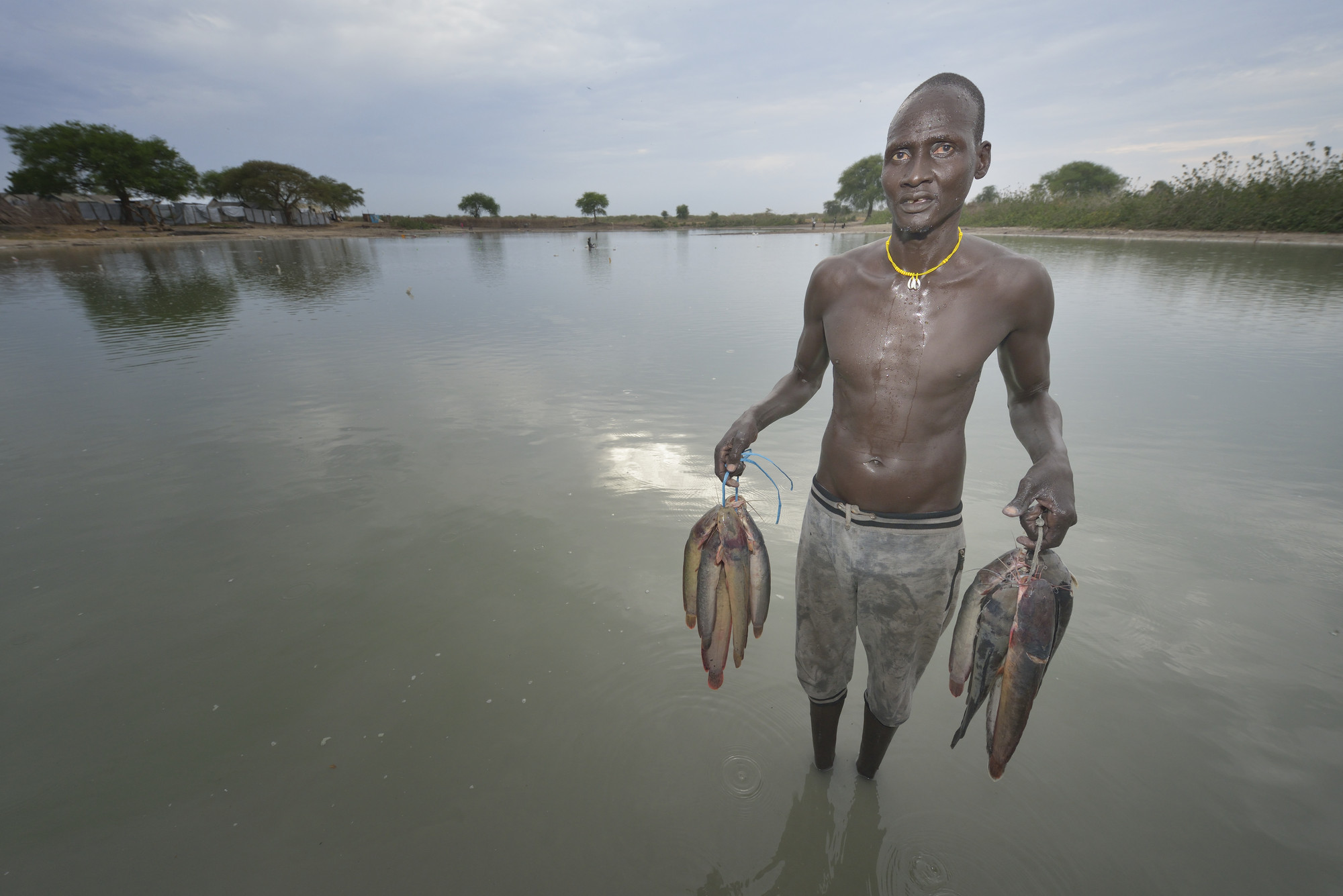
Mobil Kon displays fish he caught in Poktap, a town in South Sudan's Jonglei State where conflict, drought and inflation have caused severe food insecurity. The Lutheran World Federation, a member of the ACT Alliance, is helping families tackle food problems, including by providing cash for the purchase of fishing line and hooks. South Sudan. Photo: Paul Jeffrey/ACT
Mobil Kon displays fish he caught in Poktap, a town in South Sudan’s Jonglei State where conflict, drought and inflation have caused severe food insecurity. The Lutheran World Federation, a member of the ACT Alliance, is helping families tackle food problems, including by providing cash for the purchase of fishing line and hooks. South Sudan. Photo: Paul Jeffrey/ACT


“Give us today our daily bread.” We know the prayer, we need the prayer and the prayer reminds us of who is the ultimate giver. But the next prayer seems to deal with something totally different: “Forgive us our trespasses as we forgive them that trespass against us”. It does not.

On this Global Day of Prayer to end Famine, the problem is not a greedy God, who does not equip us with resources to end famine. There is enough food. There is food in abundance. Humans are the problem, those who have in abundance – that is: we who have in abundance. With stronger will and more imagination many of us could eat differently, not so close to the top of the nutritional chain. With stronger will, more imagination and less greed the resources could be shared, the distribution made more effective and the right to food could become a fully accepted Human Right.

Through ACT Alliance, we work to ensure that all have enough to eat.  Humanitarian relief provides food and water to those in need in the face of disasters.  Churches and agencies work on sustainable development programs to increase people’s and communities’ access to enough good, healthy food to eat every day.  ACT members join their voices in advocacy around climate change, gender justice and other issues to encourage governments to respect human rights, to support the most vulnerable people, and to provide necessary protections and actions to ensure that there is enough for all.

We have reason to ask for forgiveness, that God forgives us and that others forgive us.  And we have reason to act, as people, as Churches, and as society.

These two prayers belong together. It is when we are aware of our responsibilities, realize our shortcomings, ask for forgiveness and are given forgiveness that we get new strength – and an even greater responsibility to work for change.

_____________

Photo: WCC
Photo: WCC

Anders Wejryd, Archbishop emeritus, WCC-president for Europe.  Anders Wejryd served as Archbishop of Uppsala and primate of ACT member the Church of Sweden from 2006-14.

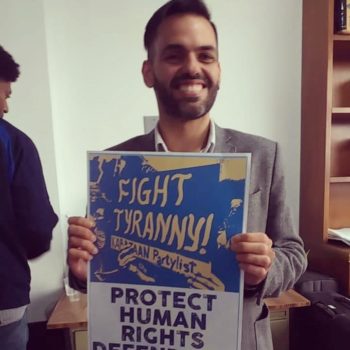
ACT Alliance stands with Guatemalan members in the face of threats to human rights defenders

ACT Alliance stands in solidarity with its members in Guatemala and with Guatemalan human rights defenders as they stand up, despite threats and attacks, to promote and protect universally recognized human rights.

The serious situation for those who work for human rights in Guatemala was painfully illustrated by the deaths of two human rights defenders in January 2017. John Nduna, General Secretary of the ACT Alliance, said, “ACT Alliance was founded to work towards a world where all people can live with dignity, justice and full respect for human rights and the environment. Threats, intimidation, and violence against people who are peacefully protecting their own and their communities’ rights cannot be allowed.”

The Guatemala ACT Forum has released a statement urging:

  1. The Public Prosecutor (MP) and corresponding authorities to investigate the assassination and attacks against human rights defenders in Guatemala, identify the perpetrators and initiate legal proceedings.
  1. The Human Rights Ombudsman (PDH) to fulfill its mandate of observing human rights and making recommendations to the Guatemalan state about how to improve the fulfillment of national and international human rights obligations, especially with regards to indigenous peoples and human rights defenders.
  1. The Ministry of the Interior to guarantee the rights to freedom of peaceful assembly and association, especially for rural populations and indigenous peoples organizing in favor of their rights to land, water, and self-determination as indigenous peoples.
  1. The State of Guatemala to implement the mechanisms established by ILO Convention 169, and other aspects of national and international law that guarantee the rights of indigenous peoples.
  1. The international community and the United Nations Human Rights Council to call upon countries with financial investments in the region to monitor and evaluate their actions so that they do not contribute to social conflicts or threats towards human rights defenders who work in favor of social and environmental justice.
  1. Churches and faith-based organizations to join in solidarity with the rural and indigenous communities of Guatemala who have mobilized in favor of the environment and human rights.

ACT Alliance is a coalition of 144 affiliated churches and organizations that work together in more than 100 countries to foster and promote a positive, sustainable change in the livelihoods of poor and marginalized people regardless of their religion, political beliefs, gender, sexual orientation, race or nationality and in compliance with the strictest international codes and norms. 

This site is registered on wpml.org as a development site. Switch to a production site key to remove this banner.