Climate Justice

Weakening multilateralism, intensifying geopolitical competition, and widening inequality between the Global North and Global South continued to shape the global climate landscape in 2025. These dynamics strained implementation of the Paris Agreement and trust in the UNFCCC process, with consequences for ambition on emissions reduction, adaptation, and support for communities facing loss and damage. Diverging positions between developed and developing countries, particularly on just transition and climate finance, underscored how contested global climate governance remains.

This made coalition-based action more important. Faith actors, civil society organisations, and community-led initiatives sustained engagement and advanced climate justice narratives within fragmented policy spaces, with ACT Alliance serving as a bridge between local realities and global climate policy processes.

The Climate Justice Programme focused on deepening member engagement, strengthening evidence-informed advocacy, and linking local implementation with regional and global policy influencing. In 2025, the programme consolidated a model that integrates practice-based learning, research, and policy engagement, producing more grounded, context-specific advocacy at national, regional, and global levels.

The programme strengthened research-led advocacy at national level through evidence-based policy analyses, including the State of Adaptation Finance in Uganda, research on Loss and Damage in Malawi, and an assessment of Kenya’s Climate-Smart Agriculture Strategy. These studies informed ACT Alliance’s advocacy with national governments, regional ministerial platforms, and the UNFCCC process. State of Adaptation Finance in Uganda Research on Loss and Damage in Malawi: Programming and Policies assessment of the implementation of Kenya’s Climate-Smart Agriculture Strategy
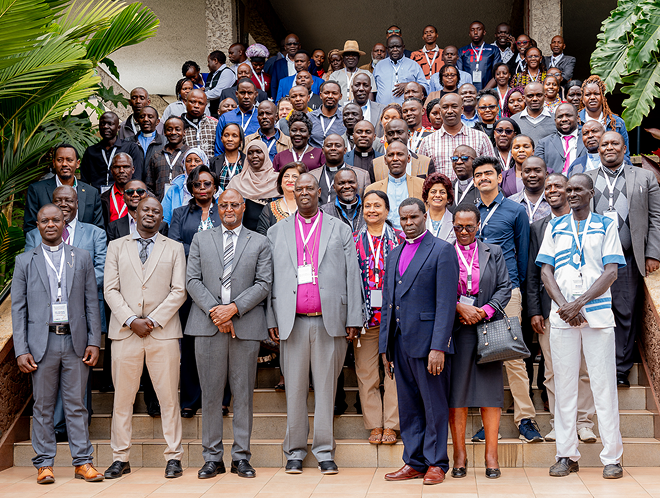

Climate justice in a shifting geopolitical order

Climate justice in a shifting geopolitical order: navigating weakening multilateralism while strengthening locally led, faith-based climate action. (An interview - video with Julius)

01
Strengthening Global Climate Advocacy and Policy Influence
01

Strengthening Global Climate Advocacy and Policy Influence


  • Coordinated ACT engagement at SB62 and COP30 on adaptation, climate finance, loss and damage, gender, just transition, and Article 2.1(c)
  • Contributed written inputs and technical recommendations to UNFCCC negotiation streams and COP30 decision texts, including the Global Goal on Adaptation, Standing Committee on Finance decisions, the Gender Action Plan, and the COP30 Mutirão decision
  • Convened bilateral engagements with negotiators, Heads of Delegation, and Ministers from the Africa Group, European Union, Least Developed Countries Group, and Latin American and Caribbean States
  • Participated in the Finance in Common Summit and OECD Climate Change Expert Group Global Forum, contributing to global discussions on climate finance and the New Collective Quantified Goal (NCQG)
  • Submitted advocacy inputs to the Fund for Responding to Loss and Damage and Financing for Development processes
02
COP30 Campaigning, and Media Engagement
02

COP30 Campaigning, and Media Engagement


  • Coordinated and supported an ecumenical delegation of 50 participants engaged in advocacy, campaigning, side events, and negotiations at COP30
  • Convened side events on adaptation finance, resilience, human mobility, loss and damage, and just transition
  • Coordinated member-led advocacy messaging through structured consultations across regions
  • Published press releases, opinion pieces, blogs, and advocacy statements amplifying ACT’s climate justice priorities
  • Secured media coverage through platforms including Dialogue Earth, Anglican Journal, The News Minute, Standard Media, Science Africa, Story Spotlight and Church Times
  • Launched the ACT Climate Justice LinkedIn page and strengthened digital communications around COP30 and Africa Climate Summit engagements
  • Produced ACT’s first digital annual report featuring climate justice and climate-induced displacement work
  • Supported the Interfaith Liaison Committee to the UNFCCC, including 2 hybrid Talanoa dialogues and 2 press conferences
03
Advancing Locally Led Climate Action and National Policy Engagement
03

Advancing Locally Led Climate Action and National Policy Engagement


  • Implemented Phase 2 of the Locally Led Climate Fund (LLCF) across Uganda, Zimbabwe, Kenya, and Liberia, while launching Phase 3 extending into 2026
  • Supported community-led adaptation initiatives including climate-smart agriculture, drought-resilient farming, ecosystem restoration, solarised irrigation systems, eco-stoves, and clean energy adoption
  • Contributed to the review of Mozambique’s Gender and Climate Change Strategy through multistakeholder consultations
  • Supported national climate positioning processes in Kenya, Uganda, Zimbabwe, Honduras, Argentina, Peru, and Brazil ahead of COP30
  • Strengthened participation of communities, youth, faith leaders, and civil society organisations in climate action and local advocacy processes
  • Strengthened linkages between local adaptation evidence and national, regional, and global climate advocacy
04
Strengthening Faith-Based Mobilisation and Regional Collaboration
04

Strengthening Faith-Based Mobilisation and Regional Collaboration


  • Convened faith leaders and ecumenical actors through the Africa Climate Summit 2, resulting in the Addis Ababa Faith Declaration on Climate Justice
  • Advanced operationalisation of the MENA Climate Justice and Faith Hub and the Africa Faith Actors and Leaders Hub
  • Strengthened collaboration between ACT members, theological institutions, ecumenical partners, and civil society organisations across Africa, Latin America and the Caribbean, Asia-Pacific, and MENA
  • Convened regional consultations and exchanges on climate justice, theology, environmental stewardship, and sustainable practices
  • Strengthened coordinated faith-based advocacy on climate finance, adaptation, rights-based approaches, and environmental justice
05
Youth Engagement and Rights-Based Climate Justice
05

Youth Engagement and Rights-Based Climate Justice


  • Supported the ACT Youth Community of Practice in developing a global youth call to action ahead of COP30
  • Convened a regional youth climate justice workshop in Bogotá and supported Honduras’ National Conference of Youth involving 134 young people
  • Strengthened integration of Human Rights-Based Approaches (HRBA) into climate adaptation, resilience, and mitigation work through workshops in Honduras, Peru, Argentina, and Asia-Pacific
  • Produced and disseminated rights-based climate advocacy resources in English and Spanish
  • Strengthened regional learning, intergenerational collaboration, and participation of vulnerable groups in climate advocacy and programming

COP30

ACT Alliance’s global climate justice engagement in 2025 bridged technical policy influencing with coordinated faith-based advocacy, ensuring equity, justice, and lived experience informed global climate decision-making in an increasingly fragmented multilateral context.

ACT Alliance engaged in the UNFCCC process throughout 2025, including the Subsidiary Bodies (SB62) and COP30. Ahead of both, ACT convened its Climate Justice members through the Climate Justice Reference Group and Advocacy Group to develop shared advocacy positions and coordinated messaging on adaptation, climate finance, gender, just transition, and loss and damage. Sustained engagement with negotiators, Party delegations, and strategic partners amplified faith-based perspectives across multiple negotiation streams.

Beyond the UNFCCC, ACT’s participation in the Finance in Common Summit and the OECD Climate Change Expert Group Forum positioned the Alliance within broader financial policy and tax justice debates, contributing to conversations on the New Collective Quantified Goal (NCQG) and evolving climate finance architecture.

ACT also contributed technical and policy inputs to the Fund for Responding to Loss and Damage and Financing for Development processes, grounding international policy design in member experience and field-level realities.

COP30 was a defining moment for this engagement. Alongside an ecumenical delegation, ACT supported coordinated advocacy, negotiation engagement, and media engagement throughout the conference, including structured engagement with multiple negotiation blocs and direct contributions to key decision texts on adaptation, climate finance, loss and damage, gender, and just transition.

COP30 also shaped public climate narratives. Through press releases, opinion pieces, and coverage across international and regional outlets, ACT helped elevate climate justice perspectives beyond negotiation spaces and into wider public discourse.

Africa


In Africa, the Climate Justice Programme strengthened policy influence and scaled locally led adaptation across Uganda, Zimbabwe, Kenya, Liberia, Mozambique, and Ethiopia.

ACT played a key role in continental climate processes, including the Africa Climate Summit 2 in Addis Ababa. The programme convened a faith leaders’ pre-summit process with 96 participants, resulting in the Addis Ababa Faith Declaration on Climate Justice, which fed into the African Leaders’ Declaration on Climate Change and Call to Action.

ACT convened two side events during the summit on climate finance and locally led adaptation, and facilitated a post-summit webinar to consolidate advocacy priorities on adaptation, loss and damage, climate finance, just transition, and gender.

At national level, ACT supported a multistakeholder consultation in Mozambique that contributed to the review of the Gender and Climate Change Strategy. In Kenya, Uganda, and Zimbabwe, ACT members engaged in national processes shaping country positioning towards COP30.

The programme implemented Phase 2 of the Locally Led Climate Fund (LLCF) across Uganda, Zimbabwe, Kenya, and Liberia, and launched Phase 3, extending into 2026.

This work strengthened locally led adaptation through practical interventions:

  • In Uganda, localised adaptation plans were developed across four regions, alongside engagement with Parliament on adaptation financing under the Needs Based Advocacy programme supported by Gates Foundation
  • In Zimbabwe, communities adopted drip irrigation supported by solarised water systems and strengthened climate-smart agriculture practices
  • In Kenya, community groups engaged in tree management and sustainable livelihoods through collaboration with the Social Services Department and the Aga Khan Foundation
  • In Liberia, drought-resilient farming approaches were piloted, i.e., the establishment of water catchment areas, with increased community interest in scaling up the initiatives in other locations

Across these countries, communities, youth, and faith leaders strengthened engagement in climate action, including ecosystem protection, clean energy adoption, and local advocacy.

Overall, the Africa programme showed how locally led action can inform and strengthen national and continental climate policy processes.

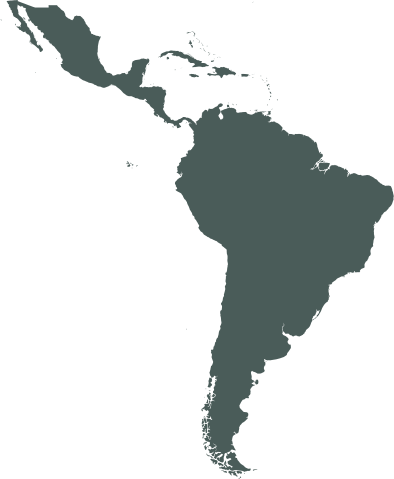
Latin America and the Caribbean (LAC)


In LAC, the programme strengthened rights-based climate advocacy and coordinated faith engagement across Argentina, Peru, Honduras, and Brazil.
ACT supported national and regional processes linking climate action with human rights and social justice:

  • Convened an ecumenical consultation in Argentina bringing together 15 faith leaders to strengthen joint advocacy on climate justice and human rights
  • Supported rights-based approach workshops in Peru and Honduras, strengthening integration of human rights into climate programming and policy engagement
  • Facilitated regional collaboration among faith actors towards COP30 through consultation processes in Brazil
  • Supported member organisations from the LAC region to engage in pre-COP30 engagements including the People’s Summit and Tapiri

In Honduras, ACT supported a National Conference of Youth with 134 participants, producing a declaration that informed national climate priorities towards COP30.

Across the region, ACT strengthened collaboration between faith actors and civil society organisations, reinforcing rights-based approaches to climate justice.

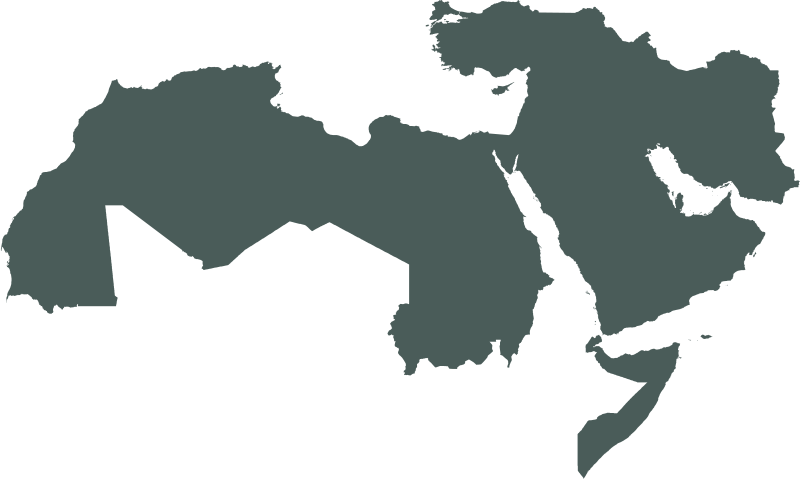
Middle East and North Africa (MENA)


In the Middle East and North Africa, the programme strengthened collaboration among faith actors and supported climate justice advocacy linked to community and church engagement.

A key development was the operationalisation of the MENA Climate Justice and Faith Based Climate (FBC) Hub, led by Bread for the World and Danmission with support from ACT. Through regional exchanges and coordination, the Hub strengthened collaboration among member organisations and supported joint advocacy on climate and environmental issues.

ACT also partnered with regional faith-based and theological institutions to convene an Eco-theological Symposium, bringing together church leaders, theologians, students, and climate practitioners to discuss climate change, environmental stewardship, and the role of faith institutions in responding to social and environmental challenges.

Across the region, the programme strengthened coordination among faith actors and supported the integration of climate and environmental issues into theological reflection, advocacy, and community engagement

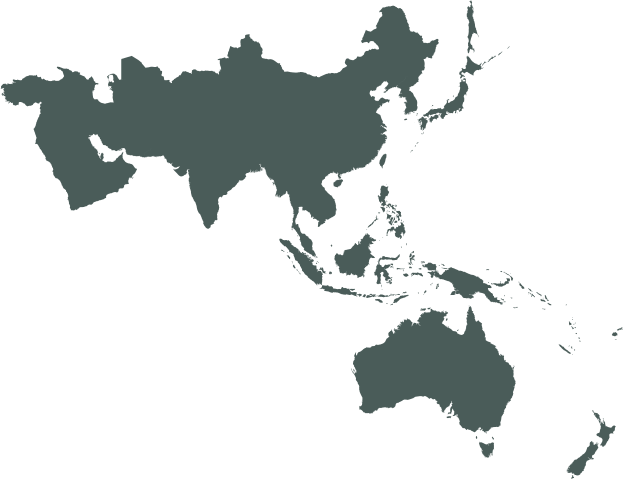
Asia-Pacific


In Asia-Pacific, the programme strengthened rights-based approaches to climate action and supported regional learning and exchange among members and partners.

ACT convened a two-day regional workshop on Human Rights-Based Approaches (HRBA) to climate change, with 35 participants, exploring rights-based approaches in climate adaptation, resilience-building, and mitigation, with an emphasis on identifying and meaningfully engaging vulnerable groups in project design and implementation.

The engagement strengthened regional learning and supported members in integrating rights-based approaches into climate advocacy and programming.

In 2026, the Climate Justice Programme will focus on:

01

Expanding locally led climate action through continued implementation of the Locally Led Climate Fund (LLCF)

02

Strengthening advocacy and programming on just energy transition and fossil fuel phase-out

03

Expanding coalition-based climate advocacy through strengthened regional faith-based hubs and alliances

04

Deepening policy analysis and research to respond to shifting geopolitical and climate governance realities

05

Strengthening evidence-based advocacy linking community-level implementation with national, regional, and global policy processes

06

Increasing member ownership and participation in advocacy and programming processes across the Alliance

07

Strengthening resource mobilisation and sustainable funding strategies to scale climate justice programming

08

Advancing advocacy on climate finance, adaptation, and loss and damage within and beyond UNFCCC processes