Humanitarian Responses & Emergency Preparedness

Supporting the strength and knowledge of our local members in humanitarian response


In 2025, the global humanitarian landscape continued to deteriorate, shaped by escalating conflict, climate-related crises, and growing geopolitical instability. Humanitarian needs rose sharply while available funding contracted, widening the gap between needs and resources, with serious implications for vulnerable communities and the organisations supporting them.


The erosion of respect for international humanitarian law and increasing risks to aid workers further complicated response efforts. For ACT Alliance and its members, this meant mounting operational pressure as organisations worked to sustain critical interventions in an increasingly constrained funding environment.


In response, ACT Alliance strengthened its humanitarian architecture with a dual focus on locally led response and coordinated action at scale. The Rapid Response Fund (RRF) remained the central mechanism for timely, localised interventions, while the appeal mechanism continued to serve as the primary vehicle for large-scale, coordinated responses to major crises.


ACT Alliance runs two humanitarian funding mechanisms: Appeals and the Rapid Response Fund (RRF). Appeals respond to more complex crises over one or more years, while RRFs fund locally identified needs quickly, reaching communities within the first critical days.

These were the active appeals and RRFs in 2025: ACT RRFs

In 2025, 18 responses were activated through the RRF mechanism: 9 in Asia, 5 in Africa, 2 in LAC, and 2 in MENA. 19 member organisations received grants through single-member and multi-member activations; two members, the National Council of Churches in the Philippines and the Christian Council of Nigeria, were each supported to serve affected communities in two separate instances during 2025.

2025 RRF Funding Summary

Most approved RRF proposals responded to floods (10), followed by forced migration (2), conflict (1), health (1), typhoon (1), earthquake (1), and heatwave (1).

USD
2321807
Total Requested
USD
1,663,623
Total Mobilised
USD
1,647,025
Total Disbursed
18
Responses Activated
16
Countries Reached
19
Members Funded
USD
91668
Average Grant Size
USD
86,686
Average Disbursement per Member

Local Humanitarian Leadership and the Triple Nexus Approach to Programming: ACT Alliance’s Humanitarian Vision for 2025

Niall O’Rourke, Head of Humanitarian Affairs at ACT Alliance,
shares how locally led action, the Rapid Response Fund, and Triple Nexus programming are shaping humanitarian response in 2025.

01
Strengthening Locally-Led Humanitarian Action
01

Strengthening Locally-Led Humanitarian Action

 
Locally-led response was strengthened across ACT’s humanitarian work, with national and community actors driving contextually grounded interventions.

  • National and local members-led implementation across diverse crisis contexts, supported by flexible and decentralised funding.
  • The Rapid Response Fund (RRF) enabled timely, locally driven interventions across 18 responses in 16 countries.
  • Expansion of Survivor and Community-Led Response (SCLR) approaches, strengthened community ownership and local decision-making,
  • Community feedback mechanisms improved accountability and responsiveness to affected populations.
02
Delivering Timely and Scalable Humanitarian Assistance
02

Delivering Timely and Scalable Humanitarian Assistance


  • 18 RRF activations supported emergency responses across Asia, Africa, LAC, and MENA
  • USD 1.66M mobilised (72% of requested funding), enabling continued response in priority crises
  • 19 member organisations funded, with an average grant size of USD 92,817
  • Appeal mechanism enabled coordinated responses to major crises, including Sudan, Gaza, Ukraine, and Central Africa
  • Majority of responses addressed climate-related disasters, particularly floods.
03
Strengthening Networked and Coordinated Response Models
03

Strengthening Networked and Coordinated Response Models


ACT enhanced its alliance-based model, enabling more coordinated, efficient, and multi-country humanitarian responses.

  • Joint appeals facilitated cross-border collaboration and aligned response strategies across regions
  • National and international members partnered to deliver integrated, multi-sectoral interventions
  • Coordination with UN agencies and national authorities strengthened access and operational alignment
  • Joint monitoring and learning processes improved coherence and shared accountability across responses
04
Advancing Integrated and Nexus-Based Programming
04

Advancing Integrated and Nexus-Based Programming


  • The Triple Nexus Appeal in Jordan and Iraq advanced coordinated humanitarian, development, and peacebuilding programming across LWF, CAPNI, and MECC in protracted crisis contexts
  • In Iraq, integrated WASH interventions improved water access through household water valve installations, water conservation awareness, and strengthened maintenance support to water authorities
  • Development outcomes were strengthened through completion of the Sumel Water Treatment Plant design and livelihoods support for women and youth through vocational training, small grants, and in-kind inputs
  • Peacebuilding and social cohesion were reinforced through GBV awareness, psychosocial support for 129 youth, and youth-led peace, leadership, and conflict resolution initiatives
  • In Jordan, vocational training in renewable energy and hybrid vehicle maintenance, combined with private sector placements, strengthened employability for refugees and host community youth
  • Early implementation demonstrates stronger linkage between humanitarian response, livelihoods, and peacebuilding in fragile contexts, informing the evolution of ACT’s appeal model
05
Strengthening Quality, Accountability, and Standards
05

Strengthening Quality, Accountability, and Standards


  • Collaboration with the Core Humanitarian Standard (CHS) Alliance strengthened alignment with global standards
  • Harmonised due diligence and capacity assessment approaches improved operational consistency
  • Community feedback systems enabled timely resolution of complaints and strengthened accountability
  • Increased focus on quality assurance reinforced principled, people-centred humanitarian action
06
Leveraging Evidence, Learning, and Adaptive Practice
06

Leveraging Evidence, Learning, and Adaptive Practice


  • Cross-country learning and joint monitoring informed real-time programme adjustments
  • Lessons from SCLR and locally led approaches were integrated into ongoing and future responses
  • Sub-regional monitoring visits supported shared learning and improved implementation quality
  • Evidence generated is informing the ongoing evolution of ACT’s humanitarian architecture
07
Sustaining Humanitarian Action in a Constrained Funding Environment
07

Sustaining Humanitarian Action in a Constrained Funding Environment


  • Flexible funding mechanisms enabled continuity of essential services despite funding gaps
  • Local partnerships improved reach, cost-efficiency, and contextual relevance
  • A 28% funding gap in RRF requests highlighted the need for more predictable and equitable financing
  • Advocacy efforts strengthened calls for increased support to locally led humanitarian response

The Alliance also invested in strengthening quality and accountability across its network, including closer collaboration with the Core Humanitarian Standard (CHS) Alliance and the rollout of harmonised approaches to due diligence and capacity assessment.

These were the active appeals and RRFs in 2025:

Where was the money spent
Country All appeals except RRF 2025 RRF 2025 Total 2025

Afghanistan

328,167

328,167

Myanmar

644,327

644,327

Bangladesh

73,561

73,561

Pakistan

155,280

155,280

Cambodia

87,150

87,150

India

150,000

150,000

Philippines

125,000

125,000

Indonesia

361,629

361,629

Thailand

50,000

50,000

Srilanka

30,000

30,000

Ukraine

1,917,383

1,917,383

DRC/Uganda/ Tanzania

1,098,676

199,936

1,298,612

Malawi

12,288

30,000

42,288

Nigeria

170,000

170,000

South Sudan

692,475

692,475

Sudan.

377,507

377,507

Haiti

226,632

226,632

Colombia

50,000

50,000

Argentina

20,000

20,000

Jordan/ Iraq

1,006,151

1,006,151

Syria

840,973

148,900

989,873

Palestine

1,269,279

1,269,279

Lebanon

183,292

183,292

Grand Total 8,670,711 1,577,895 10,248,606
Rapid Respond Fund( RRF) Spent in 2025 per Region
Region USD USD Total per Region % of Region to Total
Africa
RRF 02/2025- Tanzania 50,000
RRF 04/2025- Malawi 30,000
RRF 06/2025- Nigeria 100,000
RRF 13/2025- Nigeria 70,000
RRF 14/2025- Uganda 149,936
Africa Total 399,936 25%
Asia Pacific
RRF 05/2025- Pakistan 20,000
RRF 08/2025- Pakistan 135,280
RRF 09/2025- Cambodia 87,150
RRF 10/2025- India 150,000
RRF 11/2025- Philippines 75,000
RRF 12/2025- Philippines 50,000
RRF 15/2025- Indonesia 361,629
RRF 16/2025- Thailand 50,000
RRF 17/2025- Sri Llanka 30,000
Asia Pacific Total 959,059 61%
LAC
RRF 01/2025- Colombia 50,000
RRF 03/2025- Argentina 20,000
LAC Total 70,000 4%
MENA
RRF 07/2025- Syria 148,900
MENA Total 148,900 9%
Grand Total 1,577,895 1,577,895 100%

Africa: Democratic Republic of Congo, Uganda, Tanzania


Ongoing conflict in eastern Democratic Republic of Congo continued to drive one of the region’s most severe humanitarian crises in 2025, marked by large-scale displacement within the Kivu provinces and across borders into Uganda and Tanzania. ACT Alliance members responded through the Central Africa Appeal, working across the three countries to address urgent humanitarian needs.

The response combined locally led approaches with coordinated regional action. In eastern DRC, 481 displaced and returnee households received agricultural recovery support, including seed protection rations, technical training, and cash-voucher assistance. In Tanzania’s Nyarugusu refugee camp, WASH and hygiene interventions improved sanitation while a multi-channel feedback system resolved community complaints within 3 to 5 days. In Uganda’s Nakivale settlement, 105 shelters were built through a cash-for-work model engaging 1,325 refugees, alongside community-based protection, GBV prevention, and alternative dispute resolution led by local faith actors.

National and international members partnered to deliver coordinated assistance while strengthening cross-border collaboration and joint programming. Coordination with UNHCR and national authorities, a sub-regional monitoring visit, and joint learning processes reinforced alignment across the three countries, improving access to shelter, sanitation, livelihoods, and protection services for affected communities.

Uganda – Nakivale Refugee Settlement


Humanitarian needs in Ukraine remained significant in 2025, despite reduced global visibility. ACT Alliance members continued to respond to conflict-driven needs, with a strong emphasis on locally led programming.

Through the ACT Ukraine appeal, over 7,200 people received multi-sectoral support, including psychosocial care, shelter repairs, health services, and cash assistance. Key interventions included the repair of 221 housing units, protection services for nearly 2,000 individuals, and targeted support to vulnerable groups, including people living with disabilities. Education and community-based services were also strengthened, supporting safe learning environments and local resilience.

Building on earlier work, members expanded the use of Survivor and Community-Led Response (SCLR) methodologies, enabling communities to identify priorities and design contextually relevant interventions. This strengthened community ownership, supported local decision-making, and reinforced accountability to affected populations. A new appeal was launched following the conclusion of the previous response, ensuring continuity of support to communities affected by ongoing conflict.

Middle East:


The MENA region had 5 active humanitarian appeals in 2025, responding to the most affected populations across Gaza, Lebanon, Iraq, Syria, and Jordan. Members worked to integrate humanitarian emergency support with recovery programming where possible. ACT Alliance advanced a two-year pilot triple nexus approach through the ACT appeal in Jordan and Iraq, integrating humanitarian, development, and peacebuilding components into a single coordinated response. It is implemented by ACT Iraq Forum members Lutheran World Federation (LWF) and Christian Aid Program Kurdistan Region (CAPNI), alongside ACT Jordan Forum member Middle East Council of Churches (MECC); CAPNI is set to join the appeal in 2026. The programme is strengthening joint approaches to protracted crisis response across both countries.

The appeal, with a total budget of USD 3,366,350, targets crisis-affected populations including refugees, internally displaced people, returnees, and vulnerable host communities across multiple governorates in Iraq and key locations in Jordan, including Amman, Madaba, Al Fuheis and Al Zarka.

Early implementation shows strong progress in operationalising the triple nexus approach, particularly through integrated service delivery and locally led programming. In Iraq, LWF completed all planned activities across WASH, livelihoods, protection, preparedness, advocacy, and community engagement, contributing to both immediate response and longer-term recovery and social cohesion.

WASH interventions included community and school-based water conservation awareness, household-level water valve installations, provision of maintenance spare parts to water authorities, and door-to-door outreach, improving access to services, reducing water losses, and strengthening responsible water use.

  • A key output was the completed engineering design of a strategic Water Treatment Plant in Sumel District, providing an implementation-ready solution to strengthen long-term water systems and reduce groundwater dependence.
  • Livelihoods support reached women and youth through vocational training, in-kind tools, and small grants, strengthening income generation, business sustainability, and household resilience.
  • Protection and peacebuilding interventions included GBV awareness, psychosocial support for 129 youth, youth-led peace initiatives, and conflict resolution and leadership training, strengthening social cohesion and community participation.

In Jordan, MECC contributed to livelihoods and social cohesion through vocational training for young Syrian refugees and Jordanian participants in solar photovoltaic installation and hybrid car maintenance. Classroom learning combined with on-the-job placements at private sector companies improved technical skills, employability, and market readiness, strengthening economic resilience among participants. Further social cohesion activities are planned to reinforce positive relations between refugee and host communities.
Coordination mechanisms under the ACT Jordan Forum were strengthened through consultations on the nexus approach and peacebuilding programming, improving shared understanding and coordination among ACT and non-ACT actors in the country.

Implementation in Iraq and Jordan is progressing at different speeds due to funding disbursement timelines, with CAPNI activities commencing in 2026. The pilot has already demonstrated the value of coordinated, multi-member programming in fragile contexts, showing how integrated, locally led, and multi-sectoral approaches can strengthen resilience, improve coordination across country forums, and support more sustainable recovery pathways in protracted crisis settings. It will also inform how ACT Alliance integrates the Nexus mechanism into the evolution of the Alliance’s humanitarian mechanism. An external evaluation and a position paper are planned for 2026 to support the board in taking the necessary decisions.
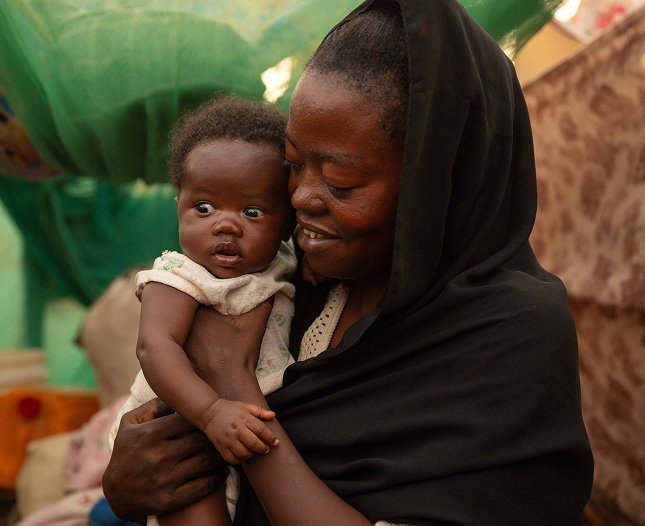
In 2026, ACT Alliance will prioritise the operationalisation and scaling of locally led humanitarian action, building on commitments made at the 2024 General Assembly.

Operationalising the Locally Led Response Pledge:
Strengthening the leadership of national members through deeper capacity sharing, mutual learning, and more equitable partnerships across the network

Expanding the Rapid Response Fund (RRF):

  • Introduction of a Capacity Sharing Fund (approx. 15% of RRF) to strengthen institutional and technical capacities of local members (Q3 rollout)
  • Launch of an Anticipatory Action Fund (approx. 10% of RRF) to enable earlier, proactive responses for members engaged in pre-existing early action mechanisms (Q4 rollout)

Strengthening Adaptive and Integrated Programming:
Scaling nexus approaches and community-led methodologies to better respond to protracted and climate-driven crises